Showing posts with label ASTM F963. Show all posts

Nov 24, 2013

Sound requirement for Caps Intended for Use With Toy Guns Toy Guns Not/ Intended for Use With Caps

Caps Intended for Use With Toy Guns Toy Guns Not/ Intended for Use With Caps
From 9 December 2013, from the notice of proposed rulemaking (NPR), the existing regulation of CPSIA is replaced by ASTM F963 on the sound testing requirement on the toys guns

caps
intended for use with toys guns in 16 CFR 1500.18(a)(5), 1500.47, and 1500.86(a)(6) were originally
promulgated by the U.S. Food and Drug Administration (FDA).. In September 1973, the Federal Hazardous Substances Act (FHSA) and the statute’s implementing regulations were transferred from the FDA to the CPSC.

16 CFR 1500.18(a)(5).
‘if such caps when so used or such toy guns produce impulse-type sound at a peak pressure level at or above 138 decibels. . . .’

16 CFR 1500.86(a)(6)
exempts toy caps that produce peak sound levels of 138 to 158 decibels if: The packaging material contains a warning regarding proper use, the manufacturer notifies CPSC, and the manufacturer participates in a program to develop toy caps that produce peak pressure levels below 138 decibels
(no manufacturers participating in this program, so revoking)

16 CFR 1500.47, provides the test method for determining the sound pressure level produced by toy caps and toy guns.
(the equipment is obsolete)


May 22, 2013

Paper testing in EN71 and ASTM F963

In EN71, the paper should be tested separated from the coating if the paper is over 400gsm.

"gsm" means the gram per square meter.

For ASTM, there is no that criteria and the paper should be tested separately anyway.

May 13, 2013

Cosmetics requirement for the tattoo in toys


3.1.19 cosmetics—any article intended or likely to be rubbed, sprinkled, or sprayed on, introduced onto, or otherwise applied to the human body for cleansing, beautifying, promoting or enhancing attractiveness, or for altering appearance.
 
4.3.4 Cosmetics—Cosmetics shall conform to the requirements of the Federal FDCA as codified in 21 CFR. The regulations applicable to cosmetics are stated in 21 CFR 700 through 740. The color additive regulations applicable to
cosmetics are found in 21 CFR 73, 74, 81, and 82.

4.3.4.1 In addition, cosmetics intended for use by children under 8 years of age shall meet all requirements of this specification and the FHSA regulations, notwithstanding the exclusions of 16 CFR 1500.81 and 1500.3 (b) (4) (ii).
 
4.3.6 Cosmetics, Liquids, Pastes, Putties, Gels, and Powders—The purpose of this requirement is to minimize the risk associated with the lack of cleanliness, shelf life, and contamination of cosmetics, liquids, pastes, putties, gels, and
powders used in toys (excluding art materials). It sets standards for cleanliness and the ability to withstand extended shelf life or contamination, or both, during use without microbiological degradation.

4.3.6.1 Water used in the manufacturing and filling of toys shall be prepared according to the bacteriological standards for USP Purified Water. (Warning—The various methods for producing purified water each present different potentials for contaminating the final product. Purified water produced by distillation is sterile, provided that the production equipment is suitable and sterile. On the other hand, ion-exchange columns and reverse osmosis units require special attention in that they afford sites for microorganisms to foul the system and contaminate the effluent. Frequent monitoring may thus be called for, particularly with the use of these units following periods of
shutdown of more than a few hours.)

4.3.6.2 The formulations of these products used in toys shall be such that they are not subject to microbial degradation during shelf life or reasonably foreseeable use.
 
4.3.6.3 The cleanliness of these products used in toys and their ingredients shall be determined in accordance with 8.4.1.  Formulations used to prevent microbial degradation shall be evaluated in accordance with8.4.2.

4.3.6.4 Formulations of cosmetics shall be evaluated for potential microbiological degradation in accordance with8.4.2
 
8.4Tests for Cleanliness and Preservative Effectiveness:

8.4.1Cleanliness of Materials—The cleanliness of cosmetics, liquids, pastes, putties, gels, and powders used in toys (excluding art materials) shall be determined using the methods in USP 24 <61> Microbial Limits Tests or the most current edition of the U.S. Pharmacopeia.15 Another method may be substituted provided it has been properly validated as giving equivalent or better results, as specified in USP 24 <61> or the most current edition of the U.S. Pharmacopeia. In conjunction with the chosen test method, the limits for determining the cleanliness of materials will consist of the most current guidelines for cosmetics set forth by the Cosmetic, Toiletry, and Fragrance Association (CTFA).

8.4.2Preservative Effectiveness—The formulations of cosmetics used in toys shall be evaluated for the potential microbiological degradation, or they shall be tested for microbial control and preservative effectiveness using the methods and limits in USP 24 <51> Antimicrobial Effectiveness Testing or the most current edition of the U.S. Pharmacopeia.

Apr 22, 2013

Metal Staple in Children book

Children book often involves the problem on the metal staple binding.
Metal staple will induce the sharp point and will be failed when tested according to EN71 or ASTM F963

Jan 21, 2013

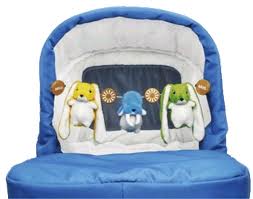
Pram toys VS crib mobile VS Crib & Playpen Toys

This is critical to classified the toys items before making the judgement on the safety requirement.

For example, the pram toys to US market, should the pram toys comply to below two clauses?


5.5 Crib and Playpen Toys—This requirement is applicable to toys intended to be strung across a crib or playpen by means of string, cord, elastic, or straps (including, but not limited to, crib exercisers, crib gyms, and activity toys).


5.6 Mobiles—This section addresses all mobiles intended to be attached to a crib, playpen, wall, or ceiling.

This question is indeed on the definition on each wording, by refering to:
http://www.cpsc.gov/cpscpub/pubs/202.pdf

Both of Clause 5.5 and 5.6 are not required.


Apr 10, 2012

CPSC Product Recall on First Quarter of 2012

From 1 Oct 2011 to 31 Dec 2011, 
2,900 imported shipments inspected by CPSC and 240 different noncomplying products (647,000 units) are identified to be unsafe.


527,950 units (82%) are children's product recall and the main causes are as below:


(During fiscal year 2011, more than 9,900 imported shipments inspected.)The recall detail list can be found here.


Feb 23, 2012

CPSIA updated with ASTM F963-11 Version

On 22 Feb 2012, CPSC accepted ASTM F963–11 as a Mandatory Consumer Product Safety Standard effective from  12 June, 2012.

Dec 21, 2011

ASTM F963 2011 Heavy Metal Change


  • Soluble heavy metals are required on toy substrate which refer from EN71 & ISO8124.
  • 3 in 1 composite test on total lead content allowed.
  • Soluble cadmium of Small metallic part shall not exceed 200 mg
  • XRF screening on total heavy metal content allowed on substrate and coating as long as the accuracy can be evaluated.