Showing posts with label US. Show all posts

Jan 19, 2015

US CPSIA 10 Phthalates Proposed

On 30 December 2014, the proposed rule 16 CFR Part 1307 - “Prohibition of Children's Toys and Child Care Articles Containing Specified Phthalates” was published on Federal Register Notice by CPSC (Consumer Product Safety Commission). 

The amendments are summarized as below and will be effective on 180 days after the final rule promulgated on Federal Register.

     
Phthalates
Proposed Scope
Previous Scope
DEHP
Permanent ban
for children's toy or child care article *1
Permanent ban
for children's toy or child care article
DBP
BBP
DIBP
Not applicable
DPENP
DHEXP
DCHP
DINP
Interim ban
for mouthable toy or child care article
DNOP
Interim ban
NOT be continued
DIDP


*1 The limit for each phthalate is <0.1%. DIBP, DPENP, DHEXP, DCHP are newly specificed.

Aug 17, 2014

CPSC Releases CHAP on Phthalates and Alternatives


The U.S. Consumer Product Safety Commission (CPSC) announced the release of a report detailing the potential effects on children’s health of phthalates and phthalate alternatives as used in toys and child care articles.

The CPSC-appointed Chronic Hazard Advisory Panel (CHAP) recommended:
1) lifting the interim bans on DnOP and DIDP and permanently banning DINP.
2) permanently banning four additional phthalates (DIBP, DPenP, DHexP and DCHP) from use in children’s toys and child care articles at levels greater than 0.1%.
3.) imposing an interim ban on DIOP from use in children’s toys and child care articles at levels greater than 0.1%.
The CHAP report concluded that food, beverages, and drugs via direct ingestion, and not children’s toys and their personal care products, constituted the highest phthalate exposures to all subpopulations, with the highest exposure being dependent upon the phthalate and the products that contain it. The report also found that DINP had the maximum potential for exposure for infants, toddlers, and older children, primarily from food but also from mouthing teethers and toys, and from dermal contact with child care articles and home furnishings.
The CPSC has 180 days from the release of the CHAP Report to evaluate the findings and promulgate a rule based on the report.
https://www.cpsc.gov/en/Regulations-Laws--Standards/Statutes/The-Consumer-Product-Safety-Improvement-Act/Phthalates/Chronic-Hazard-Advisory-Panel-CHAP-on-Phthalates/

May 28, 2014

Canada and US Pen Ink Requirement


Accordance to CCPSA/CPSIA
“surface coating material” means a paint or other similar material that dries to a solid film when a layer of it is applied to a surface. It does not include a material that becomes a part of the substrate. 
Pen ink should not under the scope. They should perform TRA for Canada requirement. 

May 6, 2014

Port Surveillance News: CPSC Stops More Than 12.5 Million Units of Violative Products from Reaching Homes in Fiscal Year 2013


3rd & 4th Quarters, FY 2013

NOTE: Data are from samples collected from April 1, 2013 to September 30, 2013. The quantities below are approximate. Minor changes may occur due to updated data.


 Total number of screenings – 14,111


Total number of products stopped –           616
Total number of units stopped –                  8,214,887


Children’s Products
Total number of products stopped –           548 (89%)
Total number of units stopped –                  2,091,737 (25%)

Products Stopped by Primary Violation/Defect
Lead – 225 (paint 14; content 211) (41%)
Phthalates – 114 (20%)
Tracking labels – 62 (11%)
Art materials – 49 (8%)
Small parts – 39 (7%)
Certification – 21 (3%)
Durable nursery products – 21 (3%)
Misbranded toys – 15 (2%)
Misbranded balloons – 8 (1%)
Battery-operated toys – 5 (1%)

The remaining 3 percent included drawstrings, pacifiers, and rattles.           

Nov 24, 2013

Sound requirement for Caps Intended for Use With Toy Guns Toy Guns Not/ Intended for Use With Caps

Caps Intended for Use With Toy Guns Toy Guns Not/ Intended for Use With Caps
From 9 December 2013, from the notice of proposed rulemaking (NPR), the existing regulation of CPSIA is replaced by ASTM F963 on the sound testing requirement on the toys guns

caps
intended for use with toys guns in 16 CFR 1500.18(a)(5), 1500.47, and 1500.86(a)(6) were originally
promulgated by the U.S. Food and Drug Administration (FDA).. In September 1973, the Federal Hazardous Substances Act (FHSA) and the statute’s implementing regulations were transferred from the FDA to the CPSC.

16 CFR 1500.18(a)(5).
‘if such caps when so used or such toy guns produce impulse-type sound at a peak pressure level at or above 138 decibels. . . .’

16 CFR 1500.86(a)(6)
exempts toy caps that produce peak sound levels of 138 to 158 decibels if: The packaging material contains a warning regarding proper use, the manufacturer notifies CPSC, and the manufacturer participates in a program to develop toy caps that produce peak pressure levels below 138 decibels
(no manufacturers participating in this program, so revoking)

16 CFR 1500.47, provides the test method for determining the sound pressure level produced by toy caps and toy guns.
(the equipment is obsolete)


Nov 14, 2013

US Custom

Federal Customs and Border Protection (CBP) officers and investigators of the Consumer Product Safety Commission (CPSC) recently seized shipments of potentially dangerous toys.
On Oct. 28 & 29, CBP officers at the Port of New York/New Jersey seized two shipments arriving from China of toy dolls, cosmetic sets, fire trucks and tractors for CPSC violations. CPSC alerted CBP to these shipments, after they determined that the shipments posed a health and safety risk. CPSC determined that some toys included excessive amounts of lead, and others represented potential choking hazards, which violate the Federal Hazardous Substances Act. CBP seized a total of 2,308 toys with an approximate total domestic value of $11,313.
“CBP, working very closely with our partners at CPSC, were able to protect the American public from these imported toys that could have potentially caused serious health and safety issues,” said Robert E. Perez, Director, Field Operations New York.
CBP in the New York/Newark area continues to work with Homeland Security Investigations (HSI), the Consumer Product Safety Commission and other agencies to combat the illegal import of unsafe goods which pose significant health and safety dangers to the American public.
To hear recall information or to report dangerous products consumers may call CPSC’s toll-free Hotline at (800) 638-2772.


Read more: http://njtoday.net/2013/11/13/investigators-seize-potentially-dangerous-toys-at-port-of-nynj/#ixzz2kfcOk6EY 

Nov 13, 2013

US Children product survey

Product Types

The CPSC Survey of Nursery Products covers a variety of infant and toddler products. Descriptions and, in some cases, illustrations of these products have been provided to respondents.

CPSC’s Survey of Nursery Products covers a variety of infant and toddler products. We have provided the below illustrations for some of these products to help you answer the survey questions. Please keep in mind:

  • The illustrations are meant to be examples only of the different kinds of nursery products that are used in households. They do not represent particular product models or brands; nor do they represent recalled products.
  • The children’s products you have in your home may not look exactly like the products in the illustrations.
  • CPSC does not make any recommendations about using or not using any of the products shown.

The products covered by the survey include:

Play Yards
Crib Bumper
Bedside Sleeper
Play Yards
A play yard (sometimes called a play pen or a travel crib) is intended for children to play or sleep in and has sides made of mesh or fabric. It may fold for storage or travel.
Crib Bumpers
Crib bumpers attach to the inside of a crib along the sides, resting directly above the mattress. They are usually
made of washable fabric.
Bedside Sleepers
A bedside sleeper is an infant bed that attaches to an adult bed. The side of the sleeper touching the bed is designed to allow the infant to be within reach of the caregiver.
Bassinets Cradles Infant Hammock
Baby in sleep positioner
Bassinets/Cradles/Infant Hammocks
A bassinet or cradle is a small bed for infants. It may rock, have wheels, or it may have freestanding legs. Infant hammocks hang from overhead and rock and sway naturally.
Sleep Positioners
A sleep positioner is used to keep an infant in place while sleeping. It can be adjusted to fit the child, and often has moveable pieces attached with Velcro®.
Booster Chairs
Baby with hook on chair
Booster Chairs
A booster chair is placed on an adult chair to raise a child to standard dining table height. It is normally used when feeding a child.
Hook-on Chairs
A hook-on chair attaches to a table with clamps or brackets so that the child can eat at the table
Front Soft Carrier
Baby in sling
Backpack carrier
Front Soft Carriers
A front soft carrier is made of sewn fabric and holds the child, sitting up, next to the caregiver’s chest. The child can sit facing either toward or away from the caregiver.
Slings
A sling is a length of fabric worn over one or both shoulders and around the waist to carry a child. A child can lie down in a sling.
Backpack Carriers
A backpack carrier is made of sewn fabric on a solid frame. It carries a child, sitting up, on the back of the caregiver. The child can sit facing either toward or away from the caregiver.
Infant carrier
Baby walker
Stationary activitiy center
Baby bouncer;
Infant Carriers
An infant carrier (sometimes called a hand-held carrier) is designed to carry an infant. It has hard sides and can be carried using a handle. It often can be used as a car seat (with a snap-in base) or with a stroller.
Walkers
Walkers have bases with wheels to make them mobile. Children can sit, bounce, jump, and use their feet to move around. Walkers generally have a fabric seat, a plastic tray, and sometimes toys.
Stationary Activity Centers
A stationary activity center is similar to a baby walker, but it does not have wheels
and stays in place. A child can sit, stand, rock, play, spin, or bounce inside it. It usually includes multiple activities or toys.
Bouncers
An infant bouncer supports a child in a reclined position. The seat can gently bounce up and down with the movement of the child or with the aid of a caregiver. The bouncer may vibrate or play music.
Safety Gates and Enclosures
Infant Bath Tub
Safety Gates and Enclosures
Safety gates are used in openings or doorways to prevent young children from entering or leaving an area. Adults can either remove the gate or pass through using a latched, swinging section. Enclosures are free-standing barriers that surround an area or play space completely.
Infant Bath Tub
Infant bath tubs hold water and can be placed into an adult bath tub, a sink, or on top of other surfaces. The child can be seated or laid in a reclining position.
Infant Bath Seats
Bathing Aids
Infant Bath Seats
Infant bath seats are used to hold an infant while they bathe. They are generally placed in adult bath tubs with children who are able to sit up. They do not hold water.
Bathing Aids
A bathing aid is a cushion, pad, or seat that allows a child to be bathed lying down. They do not hold water.
Infant swing
Infant Swings
An infant swing is a stationary product with a motor or wind-up device that swings a child in a seated or reclining position.

Cribs
A crib is a bed that is designed to provide sleeping accommodations for an infant. Its sides and ends are made of sturdy materials like wood, plastic, or metal.

Toddler Beds
A toddler bed is a child’s bed that uses a crib mattress. It may or may not have guard rails.

Bed Rails
Bed rails are attached to the sides of an adult bed to keep children from falling out of bed.

Changing Tables
A changing table provides a flat surface at about the height of an average adult’s waist. It is designed to support a child while a caregiver changes the child’s diaper.

High Chairs
A high chair is a freestanding chair that elevates a child to standard dining table height. It is usually used when feeding a child.

Strollers
A stroller is a wheeled vehicle for the transport of infants or children. The movement is supplied by a person pushing on a handle attached to the stroller.

May 23, 2013

Formaldehyde in Children’s Products Banned by Minnesota

The State of Minnesota has enacted legislation banning the sale of certain children’s products that contain intentionally added formaldehyde or ingredients that release formaldehyde when they degrade. The law defines a children’s product as a product that is physically applied or introduced into a body of a child under eight years of age. It specifically excludes food, beverages, dietary supplements, pharmaceutical products or biologics, toys that are covered by the ASTM F963 standard and medical devices. The ban goes into effect on August 1, 2014 for manufacturers and wholesalers, but it does not apply to retailers until August 1, 2015.

To view the law: 
https://www.revisor.mn.gov/bills/text.php?number=HF458&session_year=2013&session_number=0&version=latest&format=pdf

Apr 10, 2013

Small toy balls and beads that expand in water could be safety hazards


They’re colorful and alluring, but Consumer Reports says there’s a potential safety hazard with popular small toy balls and beads that expand dramatically in water. There are many of those super-absorbent polymer balls on the market, although one was recalled late last year—Dunecraft Water Balz.
It was recalled after an 8-month-old swallowed one. She was rushed to the hospital, where doctors couldn’t see anything on the X-ray. But in surgery they removed a ball almost 1 1/2 inches in diameter from her small intestine. Her pediatric surgeon said, “If nothing had been done, the intestines would have perforated, the child would have had significant infection and sepsis, and could have possibly died from it.”

Consumer Reports examined the recalled Dunecraft Water Balz fresh out of its package. And then the identical ball that soaked in water for two days.Consumer Reports also looked at tiny polymer beads that are still on the market, including Orbeez. Though their full size is much smaller than the banned Water Balz, Consumer Reports says that they also pose a safety hazard for small children. The products look a lot like candy or gum, but they can expand enough within a few hours to block the intestine or airway of a small child.

The Orbeez beads do carry warnings. On the front the package says, “Choking hazard … not for children under three years.” On the back it says, “Not suitable for children under the age of five.” Meanwhile Orbeez, whose beads are smaller than others on the market, says its tests show the toy is “safe for the children for whom it is intended.” Orbeez says the balls should pass through their digestive tract. However, Consumer Reports points out the company did not address the choking hazard or the potential of a blocked airway, which is a risk for all children.

Although additional injuries have not yet been documented in the U.S., several have been reported in other countries, including one fatality. All types of super-absorbent polymer balls have been banned in Italy and Malaysia. The Consumer Product Safety Commission says it regards “the incident involving the 8-month-old girl to be very serious, and as a result CPSC staff are taking a broader look at this product class.”

The balls are found not only in toys but are also sold widely as decorations.Consumer Reports strongly urges that parents and caregivers keep those products out of the reach of small children.

(refer from http://wtkr.com/2013/04/08/small-toy-balls-and-beads-that-expand-in-water-could-be-safety-hazards/)

Mar 6, 2013

CPSC Lead in substrates testing method

On 21 Feb 2013, HD XRF (High definition X-ray fluorescence) are approval as one of the testing method on the total lead in substrates.

So by now, total lead in substrates and in coating can be tested as below via ASTM F2853-10e1 methods.

  • Total lead in substrate by HDXRF 
  • Total lead in coating by HDXRF 
There are some limitation however:
  • The electroplated alloys, or excessive curvature, rough surface texture, or specimen thickness less than 2 mm, may require sample preparation techniques
  • Different locations of the sample are required to be measured to ensure the accuracy
  • Chemical retest is required to further clarify if the HKXRF result fall in the uncertainty.

Feb 19, 2013

Play Yards Safety requirement: by CPSIA ASTM F406-12


Beginning Feb. 28, 2013, manufacturers and importers of infant and toddler play yards are required to test their play yards to ensure that they meet new federal safety standards (refering to ASTM F 406-12, Standard Consumer Safety Specification for Non-Full-Size Baby Cribs/Play Yards).

Play yards are framed enclosures with a floor and mesh or fabric side panels. Most can be folded for storage or travel.
Play yards that meet the new safety standard must have:
  • Side rails that do not form a sharp V when the product is folded. This prevents a child from strangling in the side rail.
  • Stronger corner brackets to prevent sharp-edged cracks and to prevent a side-rail collapse.
  • Sturdier mattress attachments to the play yard floor to prevent children from getting trapped or hurt.

The new play yard standard is one of many safety standards that CPSC has passed as part of the Danny Keysar Child Product Safety Notification Act, or what we call “Danny’s Law.” Danny Keysar was killed in Chicago in 1998 when a previously recalled play yard in which he was napping collapsed, suffocating him. This new play yard standard was completed in honor of Danny and his family.


Amendment details:
http://www.cpsc.gov/PageFiles/91393/playyards.pdf
CPSC news:
http://www.cpsc.gov/onsafety/2013/02/play-yards-new-safety-rule-to-take-effect/

Feb 8, 2013

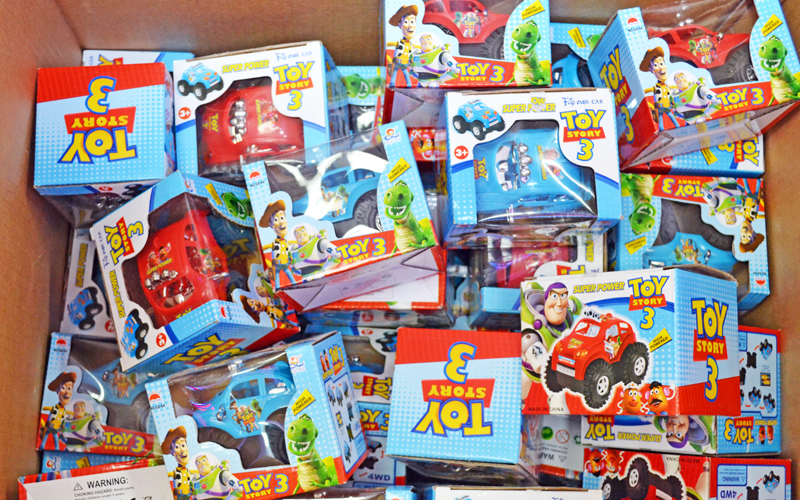
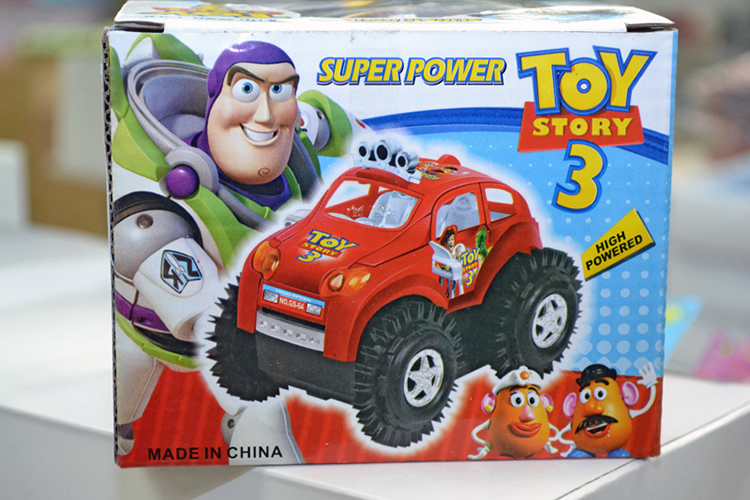
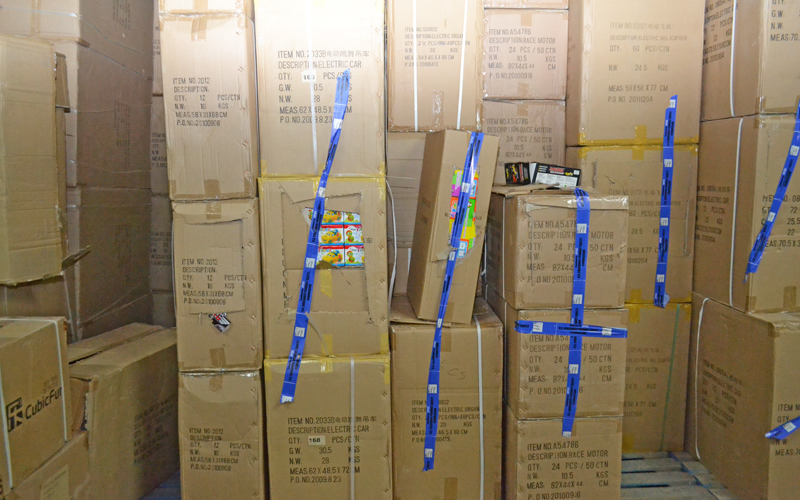
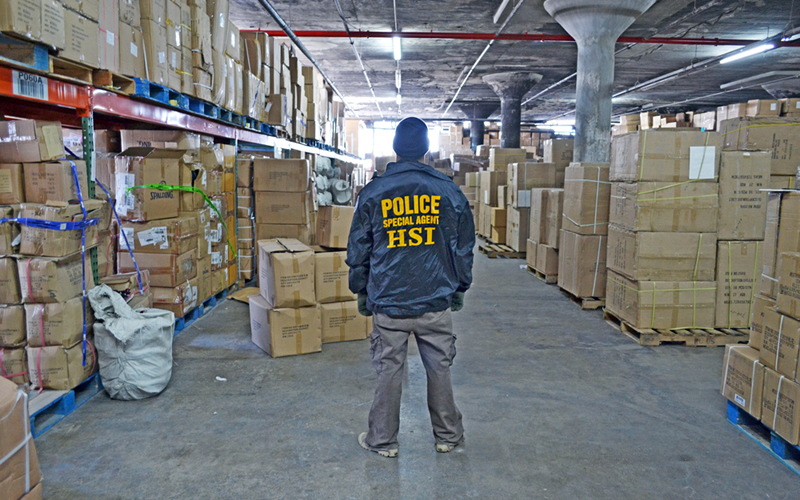
Corporations charged for allegedly importing hazardous and counterfeit toys from China for sale in the US

Referring from: http://www.ice.gov/news/releases/1302/130206newyork.htm


Corporations charged for allegedly importing hazardous and counterfeit toys from China for sale in the US

NEW YORK – Five individuals and five corporations have been charged in an indictment unsealed today for allegedly importing hazardous and counterfeit toys from China for sale in the United States. These charges stem from an investigation by U.S. Immigration and Customs Enforcement's (ICE) Homeland Security Investigations (HSI), U.S. Customs and Border Protection (CBP), the Consumer Product Safety Commission (CPSC) and the New York City Police Department (NYPD).
The 24-count indictment charges the following individuals and corporations:
  • Chenglan Hu, 51, Hua Fei Zhang, 52, and Xiu Lan Zhang, 60, all Chinese nationals and residents of Queens;
  • Guan Jun Zhang, 29, and Jun Wu Zhang, 28, both naturalized citizens and residents of Queens; and
  • The defendants' closely held corporations Family Product USA Inc., H.M. Import USA Corp., ZCY Trading Corp., Zone Import Corp. and ZY Wholesale Inc.
All are charged with importing and trafficking hazardous toys in violation of the Consumer Product Safety Act (CPSA), importing toys bearing copyright-infringing images and counterfeit trademarks, smuggling, money laundering and structuring.
The five individual defendants were arrested this morning after law enforcement executed four search warrants and nine seizure warrants. Law enforcement searched the defendants' warehouse, two residences and an email account. In addition, three luxury vehicles, including a Porsche and Lexus, three personal bank accounts and three corporate accounts were seized.
"The people and companies involved in this illegal trade not only allegedly infringed on intellectual property rights, they placed the lives of innocent children in danger," said James T. Hayes Jr., special agent in charge of HSI New York. "They allegedly sold toys with high lead content and cheap knock offs with substandard parts that break easily and pose a choking hazard. HSI is firm on using its unique customs expertise and law enforcement partnerships to put an end to the importation and sale of dangerous goods."
"The defendants are accused of importing and selling toys that posed significant health hazards to children or were the product of blatant intellectual property theft," said Assistant Attorney General Lanny Breuer, U.S. Justice Department's Criminal Division. "They allegedly retooled their operations many times in order to avoid detection, and despite repeated citations by the authorities, they continued to peddle counterfeit toys featuring Dora the Explorer, SpongeBob SquarePants and other popular children's characters. Today's actions reflect a Justice Department focused on ensuring that consumers receive safe and legitimate goods."
"For years, the defendants sought to enrich themselves by importing and selling dangerous and counterfeit children's toys without regard for the law or the health of our children," said U.S. Attorney Loretta E. Lynch, Eastern District of New York. "Profits from the counterfeit items, as well as toys riddled with lead and choking hazards, went to provide the defendants with luxury cars. We stand committed to protecting the residents of our communities from those who would engage in such conduct."
"Customs and Border Protection is on the forefront of intercepting unsafe, counterfeit products," said Robert E. Perez, director of CBP Field Operations in New York. "We are proud to have done our part preventing these dangerous toys from getting in the hands of our children."
"Today's action highlights the unprecedented level of cooperation and coordination among federal regulatory and law enforcement partners to keep U.S. consumers safe," said CPSC Chairman Inez Tenenbaum. "The United States has some of the strongest toy standards and lowest lead limits in the world, and CPSC is committed to enforcing these child safety requirements at the ports and in the marketplace."
The indictment charges that from July 2005 through January 2013 the individual defendants used their companies – the corporate defendants – to import toys from China. They sold these toys – both wholesale and retail – from a storefront and warehouse in the Ridgewood section of Queens, and other locations in Brooklyn and Queens.
According to the indictment, the defendants' companies had children's toys seized by CBP officers from shipping containers entering the United States from China on 33 separate occasions.
Seventeen of the 33 seizures were of violative toys – toys prohibited from import into and distribution in the United States, under laws and regulations enforced by the CPSC – because of excessive lead content, excessive phthalate levels, small parts that presented choking, aspiration or ingestion hazards and easily accessible battery compartments.
Sixteen of the 33 seizures were of toys bearing copyright-infringing images and counterfeit trademarks, including knockoff versions of toys featuring a wide variety of popular children's characters, including: Winnie the Pooh, Dora the Explorer, SpongeBob SquarePants, Betty Boop, Teenage Mutant Ninja Turtles, Power Rangers, Spiderman, Tweety, Mickey Mouse and Pokémon. They also sold toys from well-known movies including: Cars, Toy Story and High School Musical.
The indictment charges that following each of the 33 seizures, the violator toy company was served written notice by CBP detailing the reason for the seizure, and a representative of the company signed a release form acknowledging the seizure and abandoning the seized goods. Additionally, the violator company and its principal were served written notice by CPSC of the specific safety violations of the toys, and each time a representative of the company signed a release form acknowledging the seizure and abandoning the seized goods.
Due to the number and volume of the seizures, the individual defendants allegedly shifted their use of the companies and alternated formal roles, in order to continue importing and distributing violative and infringing toys. Each time the number of seizures accumulated for one company, the individual defendants allegedly formed a new toy company to continue importing the counterfeit and hazardous toys.
In the indictment, the government is seeking forfeiture of the seized vehicles and bank accounts and the restrained properties, in addition to a money judgment to be determined at trial.
The HSI-led National Intellectual Property Rights Coordination Center (IPR Center) is one of the U.S. government's key weapons in the fight against criminal counterfeiting and piracy. Working in close coordination with the Department of Justice Task Force on Intellectual Property, the IPR Center uses the expertise of its 21 member agencies to share information, develop initiatives, coordinate enforcement actions and conduct investigations related to intellectual property theft. Through this strategic interagency partnership, the IPR Center protects the public's health and safety and the U.S. economy.
To report intellectual property theft or to learn more about the IPR Center, visit www.IPRCenter.gov.
The case is being prosecuted by Trial Attorney Evan Williams of the Criminal Division's Computer Crime and Intellectual Property Section and Assistant U.S. Attorneys Claire Kedeshian and William Campos of the Eastern District of New York.
This case was jointly investigated by HSI and the NYPD, through its participation in the New York Border Enforcement Security Taskforce, with the assistance of CPSC and CBP.

Jun 21, 2012

Baby monitor ASTM 2951 US market


US Corded Baby Monitors Safety – ASTM F2951
Since 2002, the U.S. Consumer Product Safety Commission (CPSC) has recorded seven deaths of infants and toddlers that were caused by strangulations and three other reports of infants and toddlers who had been nearly strangled as a result of entanglement in baby monitor cords.
To minimize strangulation hazards to children, a voluntary Standard Consumer Safety Specification for Baby Monitors ASTM F2951-12 was published in May 2012.  Corded baby monitors including audio monitors, video monitors and motion sensor monitors shall comply with the use and abuse requirements and the established requirements for labeling, instructional material and packaging.

Specific requirements under this ASTM F2951:


  • Hazardous sharp points or edges shall not be found before and after testing;
  • Accessible cord of baby monitor shall be properly encased or put at least 3 ft away from a crib;
  • Paint and surface coating shall comply with 16 CFR 1303 for total lead;
  • No flammable solid as defined by 16 CFR 1500.3(c)(6)(vi);
  • Specific warnings (as listed below) and a pictogram shall be shown permanently, clearly and legibly on the baby monitor cords or cord encasement, where the alert symbol and the word “WARNING” shall not be less than 5mm high and the capital letter of remaining words not less than 2.5mm high.


Transmitter not intended to be attached to a crib
* WARNING—Strangulation Hazard—Children have STRANGLED in cords. Keep this cord out of the reach of children (more than 3 ft (0.9 m) away). Do not remove this tag.
To be placed on a label affixed to the cord no greater than 4 in. from the plug/jack.
Transmitter intended to be attached to a crib
*  WARNING—Strangulation Hazard—Children have STRANGLED in cords. NEVER attempt to use cord without the protective covering. Check protective covering before each use to ensure that the cord is not exposed to your child. Immediately discontinue use if protective covering is damaged or broken. Do not remove this tag.
WARNING—Strangulation Hazard—Children have STRANGLED in cords. NEVER attempt to use cord without the protective covering. Do not remove this tag.
To be placed on the cord enclosing.
To be placed on a label affixed to the cord no greater than 4 in from the plug/jack.
Transmitter can be attached to a crib with shielding, or used away from the child.
*  WARNING—Strangulation Hazard—Children have STRANGLED in cords. Always use protective covering when used within 3 feet of crib. Check before each use to ensure that the cord is not exposed to your child. Immediately discontinue use if protective covering is damaged or broken. Do not remove this tag.
WARNING—Strangulation Hazard—Children have STRANGLED in cords. When using without protective covering, keep this cord out of the reach of children (more than 3 ft (0.9 m) away). Do not remove this tag.
To be placed on the cord enclosing.
To be placed on a label affixed to the cord no greater than 4 in from the plug/jack.
Receiver
* WARNING—Strangulation Hazard—Children have STRANGLED in cords. Keep this cord out of the reach of children (more than 3 ft (0.9 m) away). Do not remove this tag.
To be placed on a label affixed to the cord no greater than 4 in from the plug/jack.