Showing posts with label Standard. Show all posts

Nov 12, 2012

Small magnet is dangerous!

These several years, the high power small magnetic metal beads are getting hot in the market. It is so popular that even small children gets interested. There are cases that the children swallowed the more than one magnets which stick together in the guts and cause deaths.

Australian Competition & Consumer Commission issued a permanent ban on the magnets that:


  • are small enough to fit into the small parts cylinder used in the mandatory standard for toys for children up to and including 36 months of age.
  • have a magnetic flux of 50 or more.
  • are marketed by the supplier as, or supplied for use as any of the following:
    • a toy, game or puzzle (including but not limited to an adult desk toy, an educational toy or game, a toy, game or puzzle for mental stimulation or stress relief)
    • a construction or modelling kit
    • jewellery to be worn in or around the mouth or nose.

Jan 2, 2012

Hong Kong Toys And Children's Products Safety Ordinance

As the worldwide standards updated, HK 424 (the Toys and Children's Products Safety Ordinance (Cap. 424)) is amended as below:

Dec 29, 2011

Hong Kong Toy & Children Product Safety

In Hong Kong, the toy & children product are regulated by HK customs via HK Ordinance 424. There is NO Hong Kong's own regulation. Same as other small countries and regions, Hong Kong is referring to other major countries' regulation such as EN71, ASTM F963 etc.

And this is common also for these country or region, the toy and children product safety is more risky than other major countries which have their own standards.

In additional to other testing cost reason.
These country or region retailers often confuse on what regulation should be complied because, by the law, the strictest and latest regulation should be complied, the same case as the custom inspector.

Dec 21, 2011

ASTM F963 2011 Heavy Metal Change


  • Soluble heavy metals are required on toy substrate which refer from EN71 & ISO8124.
  • 3 in 1 composite test on total lead content allowed.
  • Soluble cadmium of Small metallic part shall not exceed 200 mg
  • XRF screening on total heavy metal content allowed on substrate and coating as long as the accuracy can be evaluated. 


Dec 20, 2011

Malaysia Toys Safety Requirement

Even the market is no as big as other major countries, Malaysia had enforced the toys safety standards by the regulation:
  • Consumer Protection (Safety Standards for Toys) Regulations 2009 
  • Consumer Protection (Certificate of Approval & Approach Safety Compliance Standard) 2009 
MS ISO 8124, EN71, or ASTM F963 are also acceptable for Malaysia Custom. The only thing different is the MC mark and warning in Malaysia language

http://ec.europa.eu/enterprise/tbt/tbt_repository/MYS15_EN_0000.doc
https://members.wto.org/crnattachments/2014/tbt/MYS/14_1193_00_e.pdf

BPA in children items

BPA (Biphenol-A) is concerned over these months, some countries in Europe, Canada and some states of US have banned Biphenol-A recently. Indeed, there is regulation in Europe on baby bottle (EN14350) which is focused on the thermoplastic PC and PS. This is obvious that BPA is harmful to children not only in baby bottle but also other children article as long as this can be put in mouth. Total BPA content is recommended to be tested for all plastic which can be put in children mouth

Dec 19, 2011

EN71 Toys Bicycle VS Balance Bike

EN71 detail.
Toy bicycle:
Two-wheeled vehicle, with or without stabilisers, with a maximum saddle height of 435 mm or less and which is propelled solely by the muscular energy of the person on that vehicle, in particular by means of pedals, and which has either a free-wheeling mechanism or a fixed drive.

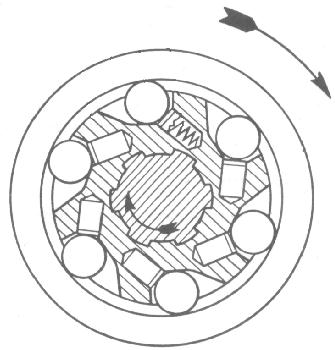
Free-wheeling mechanism:
Transmission in which the drive mechanism is disengaged from the driven shaft when the driven shaft rotates faster than the drive mechanism
NOTE An example of the use of a free-wheeling mechanism is a bicycle which is going downhill without the pedals moving. Without a free-wheeling mechanism the rear wheel would drive the pedals around.
Free Wheel Mechanism 
The definition clarifies that to have a free-wheeling mechanism, the vehicle must have a driven shaft. A balance bike does not have a driven shaft in the same manner as we mean on a bicycle.